Website under Maintenance. We regret any data inaccuracies. Thank you for your patience.





Pinkishe Foundation

4/5/2026
Picture your typical Tuesday at work. A back to back schedule. Two important meetings before lunch. A presentation in the afternoon. A team review in the evening. You are leading projects, mentoring younger people, navigating office politics, delivering on quarterly goals.
Now layer onto that. A hot flash that arrives twenty minutes into the morning meeting. Brain fog that makes you forget the name of the colleague you have known for eight years. The exhaustion of having slept poorly for the third night in a row. Anxiety that sits in your chest through the afternoon. Your body, in the middle of all of this, is in transition, and you are expected to perform as if everything is the same.
This is the daily reality for thousands of Indian women working through perimenopause and menopause. And almost no workplace in India is set up to acknowledge it, let alone support it.
Indian women are working in larger numbers, in more senior positions, and for longer than any previous generation. The average woman in a corporate role is more likely to be working through her perimenopause years than ever before. And yet workplace conversations about menopause are almost non existent.
This is changing slowly in some global companies. Some Indian organisations are beginning to acknowledge menopause in their wellness conversations. But most women going through it are doing so silently, without any institutional understanding or support.
This means you are likely navigating this on your own, and you deserve some honest tools to do so.
The symptoms you have at home do not stay at home. They show up at the office, in meetings, on calls, in front of clients.
Hot flashes during meetings. The wave of heat arrives with no consideration for your schedule. You discreetly fan yourself. You hope nobody notices. Sometimes nobody does. Sometimes someone does and you wish they had not.
Brain fog at the worst possible moments. You stand up to present and lose the thread. You walk into a colleague's office and forget why you came. You miss a small detail in an email and your perfectionism eats at you for days afterwards.
Exhaustion that no amount of coffee fixes. You are running on broken sleep and your body is not refilling its tank the way it used to. By 3pm you are operating on reserves.
Mood reactivity. Things that would not have bothered you five years ago suddenly feel disproportionately frustrating. Your patience runs shorter. Your tolerance for office politics drops.
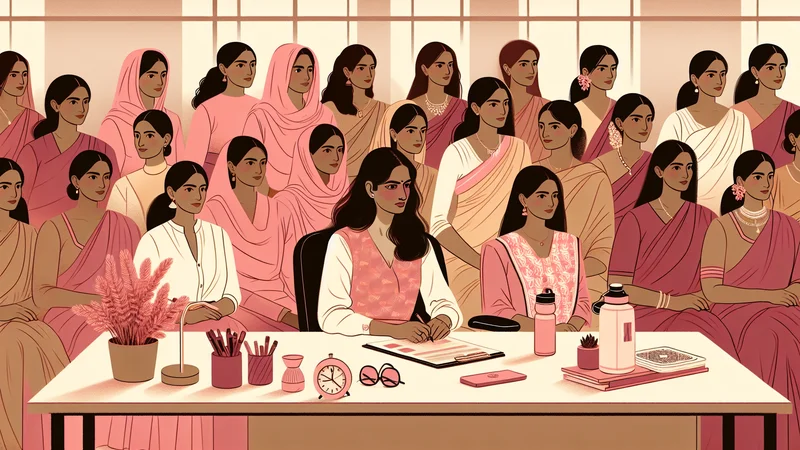
Anxiety in moments that used to feel routine. The presentation you have given a hundred times now produces nervous energy. You wonder why you are suddenly unsure of yourself.
Heavy or unpredictable periods. Long meetings become difficult. Travel becomes complicated. You manage logistics that no one else has to think about.
Most Indian women going through menopause at work hide it deliberately. There are clear reasons for this.
Career concerns are real. There is a fear, sometimes justified, that admitting to physical or cognitive struggles will affect promotions, performance reviews, or how seriously you are taken. Women who are already navigating bias around age and gender do not want to add another reason to be underestimated.
Cultural reasons. Indian workplaces still have a strong norm of not discussing personal matters, especially women's health matters. Saying you are having a hot flash to a male colleague feels almost unthinkable in most settings.
Lack of role models. Few senior women in Indian workplaces have spoken openly about working through menopause. Without these examples, younger women going through it feel they are inventing the response from scratch.
Internal pressure. Many women hold themselves to extraordinarily high standards. Admitting that their body is making things harder feels, somehow, like admitting failure.
These are practical, drawn from women who have navigated this successfully.
Manage your environment where you can. Keep a small fan at your desk. Wear layers you can remove. Avoid corner seats in meeting rooms where temperature might be harder. Keep cold water nearby. None of this is dramatic and all of it helps.
Rethink your schedule when possible. If you have any flexibility in your day, place your most demanding work in the morning when energy and clarity are usually best. Save lighter administrative work for the afternoon energy dip.
Take your sleep seriously. Sleep is the foundation under your work performance. Treat it as a professional priority, not a personal indulgence. Do whatever it takes to protect those hours.
Build in proper breaks. Indian workplaces tend to glorify the person who never stops. In midlife, this approach will hurt you. Take real breaks. Walk for ten minutes. Eat a proper lunch away from your desk. Step outside for fresh air. These are not luxuries.
Be intentional with caffeine. Coffee feels like the answer when you are tired but it disrupts sleep that night and worsens anxiety. Stick to your one or two morning cups and switch to herbal tea or water in the afternoon.
Manage stress proactively. Twenty minutes of meditation in the morning, or a walk at lunch, or simply five deep breaths before stressful meetings, all reduce the load your body is carrying.
Have a small support circle. Identify one or two trusted colleagues or friends who know what you are going through. The relief of being able to message someone "having a flash, walking out for two minutes" cannot be overstated.

This is the million dollar question, and the honest answer is, it depends.
If your manager is someone you trust, who has shown understanding of personal challenges, and who has decision making power over your workload, sharing what you are going through can be helpful. Even a general statement like "I am navigating some health things in midlife and may need a bit of flexibility on a few days" gives them context without going into detail.
If your manager is unlikely to understand, or could use the information against you, you do not owe them an explanation. Manage what you can manage on your own and make accommodations through other means where possible.
There is no single right answer. Read your environment honestly and make the choice that protects both your work and your wellbeing.
This article is for you, the woman going through it. But it is worth naming what good workplaces look like, because we should expect more from our employers over time.
Awareness training so colleagues, particularly managers, understand menopause and how it shows up at work.
Practical accommodations like temperature control, flexible scheduling during difficult phases, and access to private spaces for short breaks.
Healthcare benefits that explicitly cover menopause related needs, including hormone testing, gynaecology consultations, and mental health support.
A culture where women are not penalised for naming what is happening to them.
Some Indian organisations are beginning to do this. Most are not yet. The change has to be demanded by women who are willing to name what is happening to them, and that demand will grow over the coming years.
Working through menopause requires a level of grace, ingenuity, and quiet endurance that most workplaces do not see. You are doing harder work than your job description acknowledges, and you are doing it well.
Be kind to yourself in this period. Adjust where you can. Push back where you must. Build your support around you. And know that you are part of a generation of Indian women slowly reshaping what it looks like for women to work, lead, and live through their full lives, including this one.
Across India, millions of women are working through this phase invisibly. Many of them are also raising children, caring for parents, holding their households together. They deserve more support than they are getting. At Pinkishe Foundation, we work to bring honest health information to women everywhere. Five hundred rupees gives one girl a full year of menstrual health support that builds her foundation for the rest of her life.
If today's article reflected your reality even a little, perhaps you can help us reach another woman somewhere who needs to feel seen.
That depends on your relationship with your manager and workplace culture. If you trust them and they have shown understanding of personal challenges, sharing in general terms can be useful. If not, manage privately and make accommodations through other means.
Keep cold water within reach, dress in light layers, sit near doors or vents where possible, and have a small handheld fan in your bag. If a flash arrives, breathe slowly, fan discreetly, and continue. The episode usually passes within a few minutes.
Yes, very common. Hormonal changes affect concentration, word recall, and short term memory. This usually improves significantly in postmenopause. In the meantime, lean on lists, calendars, notes, and clear scheduling to support yourself.
Working through menopause is harder than the workplace acknowledges. You are doing more than your job description recognises. Adjust what you can, ask for what you need, and treat your body with the care it deserves while you continue showing up. The women who come after us will benefit from the openness we begin to model now.
Visit pinkishe.org to learn about our work for women across India, or support us so we can keep reaching more women who deserve to be seen and supported.
Just ₹500 gives one girl a full year of menstrual protection. Tax-deductible under Section 80G.
YOU CAN MAKE A DIFFERENCE
Just ₹500 gives one girl safe menstrual protection for an year.
Tax-deductible under Section 80G.
4,16,600+ women supported 34,50,000+ pads distributed
Join us

Priya S. donated ₹500 · 2 hrs ago
Rohit K. donated ₹1,500 · Yesterday
Meera T. donated ₹200 · 2 days ago
Sneha J. donated ₹500 · 3 days ago
Kavita D. donated ₹1,500 · 4 days ago


%20(3).webp)
%20(5).webp)

.webp)
.png)

%20(5).webp)
%20(2).webp)

%20(4).webp)
