Website under Maintenance. We regret any data inaccuracies. Thank you for your patience.




Pinkishe Foundation

4/5/2026
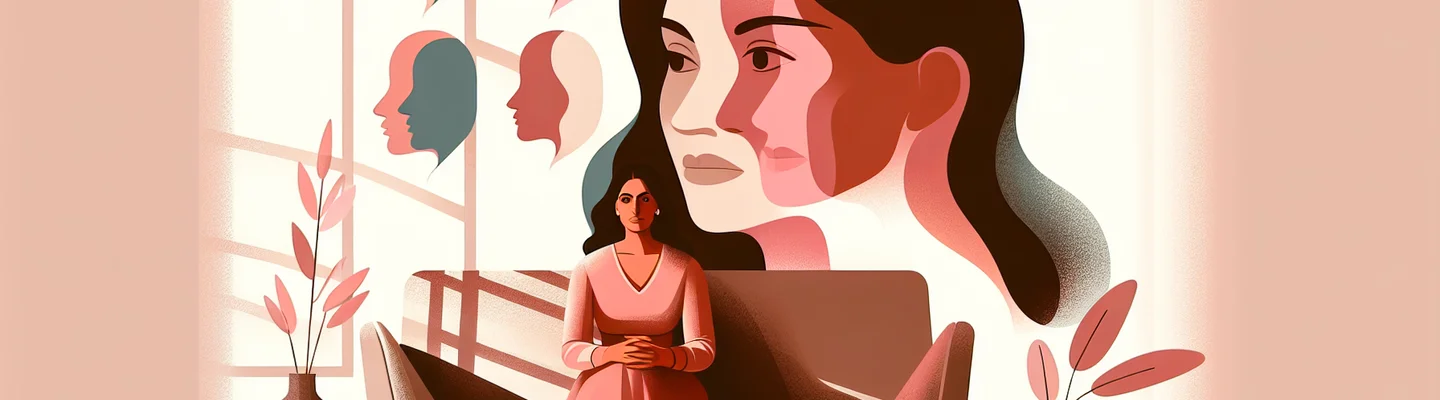
You used to be the calm one. The person everyone leaned on. The friend who never really lost her temper. And then, somewhere in your early or mid 40s, something shifted.
You snap at your husband over the most ordinary things. You cry during television advertisements. You feel anxious for no reason at all and the feeling sits in your chest for hours. You snapped at your mother in law last Sunday over the smallest comment and you are still thinking about it a week later. None of this feels like you, and that is the most disorienting part.
Most Indian women going through this are told it is stress. Or that they are being too sensitive. Or that they need to manage themselves better. Some are told they might be depressed. A few are quietly handed a prescription for anxiety. Almost nobody is told the simplest, truest answer.
Your hormones are doing a number on your brain. And it is not your imagination.
Most of us think of oestrogen as a reproductive hormone. That is partly true, but it does so much more than that. Oestrogen plays a major role in regulating serotonin, the brain chemical responsible for mood, calmness, and a sense of wellbeing. When oestrogen levels are stable, serotonin works steadily. When oestrogen fluctuates wildly, as it does during perimenopause, serotonin goes along for the ride.
The result is a mood landscape that no longer behaves the way you are used to. Small things feel bigger. Anxiety arrives without an obvious trigger. Sadness shows up unexpectedly. Anger feels closer to the surface than it ever did before. None of this is a sign of weakness or failure. It is a chemical reality of the perimenopausal brain.
There is also another factor at play. Sleep, which is one of the most important regulators of mood in any human being, often falls apart during perimenopause. When you are running on broken sleep month after month, your emotional resilience naturally drops. Add the hormones to that, and you have a perfect storm.
Most Indian women describe some version of these.
Anxiety that feels disproportionate to the situation. You worry about something small and cannot stop. You wake up with a racing heart for no clear reason. You feel slightly on edge most days, even when nothing is wrong.
Sudden tears. You are watching a perfectly ordinary scene in a film and your eyes fill up. You hear a song from twenty years ago and feel an unexpected wave of emotion. You do not know why, and you cannot stop it.
Irritability that feels new. Things that would have rolled off your back five years ago now genuinely bother you. The volume of your husband's voice. A small comment from a colleague. The traffic on the way home. You wonder when you became so impatient.
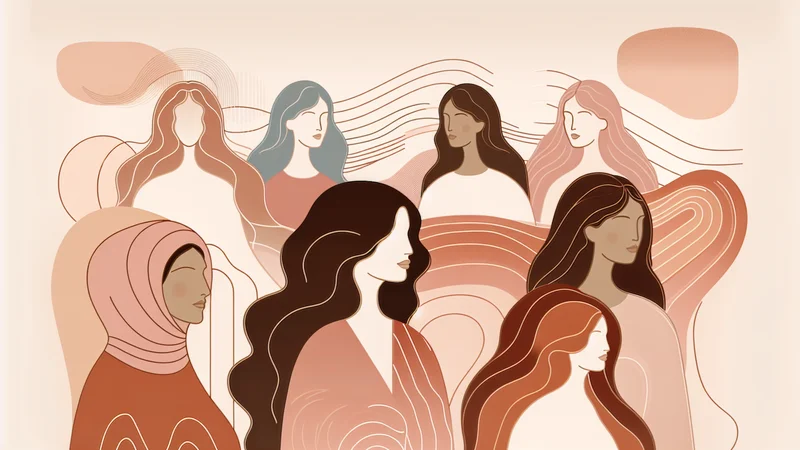
A general flatness or low mood. Some women describe it as feeling slightly empty. The things that used to bring you joy still happen, but they do not lift you the way they used to. Many women mistake this for depression, and for some women it can tip into actual depression that needs proper care.
A sense that you are not yourself. This is the most unsettling one. The internal voice you are familiar with feels different. Your reactions surprise you. You wonder, quietly, if you are losing yourself. You are not. Your hormones are temporarily rewriting the rules. The you that you know is still there, underneath.
Indian culture has a complicated relationship with women's emotions. Strong emotion is often seen as drama, weakness, or hormonal in the dismissive sense rather than the medical sense. Women who express anger, anxiety, or sadness are usually told to calm down, control themselves, or stop overthinking.
Doctors often do not catch it either. A 44 year old woman walks into a clinic feeling anxious and tearful. The doctor checks thyroid, runs basic tests, finds nothing, and tells her to relax or perhaps suggests an SSRI. Almost nobody runs an FSH or oestrogen panel. Almost nobody mentions perimenopause.
Families struggle to understand. Husbands take it personally. Children get confused. Mothers in law tell their sons to be patient with their changing wives. The woman in the middle of it all gets the impression, often subtly, that she is the problem.
She is not the problem. The lack of conversation is the problem.
First, name what is happening. The simple act of saying "this is perimenopause" out loud, to yourself or someone close to you, takes much of the confusion out of the experience. You stop blaming yourself. The fog lifts a little.
Second, get your hormones checked. An FSH and oestrogen test gives you and your doctor real information. If your hormones are clearly fluctuating in a perimenopausal pattern, you have your answer. Then you can decide together what to do about it.
Third, look at sleep, exercise, and food. Better sleep alone can reduce mood swings significantly. Regular movement, even just brisk walking, releases the brain chemicals that stabilise mood. A diet with enough protein, calcium, and minimal alcohol or caffeine helps your nervous system recover.
Fourth, consider professional support. Talking to a therapist who understands perimenopause can be genuinely useful. So can connecting with other women going through the same thing. The isolation of feeling like you alone are losing your mind is half the suffering. Take it away and the experience becomes much more bearable.
Fifth, talk to the people closest to you. Tell your partner what is happening. Tell your children, in age appropriate ways. Tell your closest friends. Most people will surprise you with how much they understand once they are let in. Most importantly, you stop feeling alone in your own home.

Most mood changes during perimenopause settle on their own or with the basic interventions described above. However, please reach out for medical help if you are feeling persistently low or hopeless for more than two weeks, if you are having thoughts of harming yourself, if anxiety is preventing you from working or functioning, or if your relationships are seriously suffering.
Depression and anxiety during perimenopause are real and treatable. There is no shame in needing more support.
You are not losing your mind. You are not too sensitive. You are not failing as a partner or a parent or a professional. You are a woman whose hormones are rewriting the rules temporarily, and your brain is doing its best to keep up.
The most generous thing you can do for yourself right now is to extend yourself the same kindness you would extend to a friend going through this. The most generous thing you can do for the women around you is to talk about it openly, so they recognise what they are experiencing too.
Across India, there are millions of women going through this in silence, blaming themselves, struggling to hold it together. Some of them are your friends. Some of them are strangers in distant villages who will never read this article. At Pinkishe Foundation, we work every day to make sure women across this country have access to honest information about their own bodies and minds. Five hundred rupees gives one girl a full year of menstrual health support. Information that becomes a foundation she carries through her whole life.
If today's reading made you feel a little less alone, perhaps you can help another woman feel that too.
Yes, very common. The fluctuation of oestrogen affects serotonin and other brain chemicals, leading to mood changes. Most women experience some degree of irritability, anxiety, or low mood during perimenopause.
Mood changes are usually most intense during perimenopause, which can last from two to ten years. Many women find their mood stabilises significantly once they reach postmenopause and hormones level out.
If you are feeling persistently low or hopeless for more than two weeks, if anxiety is interfering with daily life, or if you have thoughts of self harm, please see a doctor immediately. Depression during perimenopause is real and treatable.
Menopausal mood swings are not a personality flaw. They are a chemical reality of a body in transition. Understanding what is happening makes everything easier to live with, and to talk about.
You are not alone in this, even if it sometimes feels that way. Millions of women across India and around the world are going through the same thing right now. The kindest thing we can do for each other is to name it openly.
Visit pinkishe.org to learn about our work for women and girls across India, or support us so we can reach more women who need someone to explain things honestly.
Just ₹500 gives one girl a full year of menstrual protection. Tax-deductible under Section 80G.
YOU CAN MAKE A DIFFERENCE
Just ₹500 gives one girl safe menstrual protection for an year.
Tax-deductible under Section 80G.
4,16,600+ women supported 34,50,000+ pads distributed
Join us

Priya S. donated ₹500 · 2 hrs ago
Rohit K. donated ₹1,500 · Yesterday
Meera T. donated ₹200 · 2 days ago
Sneha J. donated ₹500 · 3 days ago
Kavita D. donated ₹1,500 · 4 days ago


%20(4).webp)
%20(3).webp)


.png)

%20(5).webp)


%20(2).webp)
.webp)

%20(5).webp)