Website under Maintenance. We regret any data inaccuracies. Thank you for your patience.




Pinkishe Foundation

4/5/2026
Indian food gets a bad reputation in health conversations. Too oily, too carb heavy, too rich in sweets, the criticisms are familiar. But the truth is more interesting than the reputation. Traditional Indian food, when you know what to focus on, is actually beautifully suited to support women through midlife and menopause.
You do not need imported superfoods. You do not need expensive supplements. You do not need to abandon the food you grew up with. You just need to know what to add, what to reduce, and what to think about a little differently.
During this phase, your body has a few specific needs that good food can meet.
You need more protein. Muscle loss accelerates after 40, and protein is what keeps muscle alive. Indian diets, especially vegetarian ones, often run light on protein.
You need more calcium. Bone density drops faster after menopause. Calcium becomes essential, not optional.
You need vitamin D and B12. Both are commonly deficient in Indian women, and both matter enormously in midlife.
You need anti inflammatory foods. Lower oestrogen means more baseline inflammation, and food can either fight it or feed it.
You need gut health support. Your gut bacteria affect everything from mood to weight to immune function, and they need fibre and variety to thrive.
You need fewer refined carbohydrates and added sugars than you used to. Your body processes them less efficiently in midlife.
These are the foods that genuinely help, all of them familiar, all of them probably in your kitchen already.
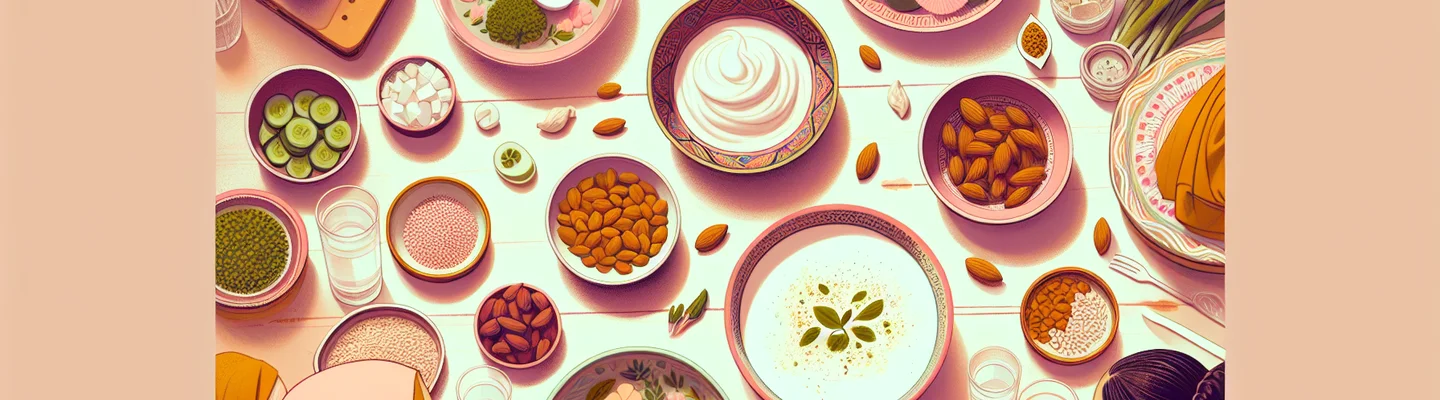
Soaked almonds and walnuts. Five to seven a day. Excellent source of healthy fats, protein, vitamin E, and minerals. The omega 3 in walnuts is particularly helpful for inflammation and mood.
Sprouts and pulses. Moong sprouts, chana sprouts, sprouted methi, all are protein rich, fibre rich, and easy to add to meals. A katori a day makes a real difference.
Dahi and homemade buttermilk. Fermented dairy supports gut health and provides calcium. Fresh dahi with meals is one of the simplest health upgrades you can make.
Til and flaxseeds. Both are excellent sources of plant lignans, which can have a mild oestrogen-like effect that helps some women with menopausal symptoms. A teaspoon of ground flaxseed in your dahi or daal works beautifully.
Methi and fenugreek. Soaked methi seeds in the morning have a long history in Indian women's health and may help with hot flashes and blood sugar regulation. Fresh methi leaves are excellent in your weekly cooking.
Leafy greens. Palak, methi, sarson, chaulai, all are rich in calcium, iron, and antioxidants. Aim for some leafy greens four or five times a week.
Berries and seasonal fruit. Indian berries like jamun, amla, falsa, and shahtoot are powerhouses. So are apples, oranges, papaya, and guava. Eat them with the skin where appropriate.
Turmeric and ginger. Both are anti inflammatory and easy to use daily. Turmeric in your daily cooking, ginger in your tea or food, both add up over time.
Whole grains. Bajra, jowar, ragi, and oats are far more nutrient dense than refined wheat. Rotating these through the week supports better blood sugar and gives you more minerals.
Fish if you eat it. Twice a week. Salmon, mackerel, sardines for omega 3, or local Indian fish like rohu and bangda are excellent.
Eggs. Two a day if your doctor approves. One of the most complete protein sources available.
Soaked dates and figs. Small natural sources of iron and energy, far better than processed sweets when you want something sweet.
Not eliminate, just be honest about.
Refined sugar and ultra processed sweets. Mithai on special occasions is fine. Daily biscuits, sugary chai, packaged sweets, all add up faster than they used to.
Refined oil and excessive ghee. Ghee in moderation is fine and actually helpful. Daily fried food and excessive oil burden a midlife body.
Maida and white refined flours. Bhature, naan, white bread, biscuits, samosas, all are familiar but worth reducing. Your blood sugar and waistline will both thank you.
Salt heavy snacks. Namkeen, chips, papad, pickles in large quantities all push up blood pressure and can worsen bloating and hot flashes.
Alcohol. Red wine, in particular, can trigger hot flashes and disrupt sleep. Reducing it produces noticeable improvements within weeks.
Caffeine after 2pm. Not the morning chai, just the afternoon and evening coffee that is messing with your sleep.
This is one example, not a strict prescription. Adapt it to your own preferences and routine.
Morning. Soaked methi seed water on empty stomach. Then breakfast of poha or upma with vegetables, or two eggs with one chapati, or dalia with milk and chopped fruit. A few soaked almonds and walnuts.
Mid morning. Buttermilk with jeera and pudina, or a small bowl of seasonal fruit.
Lunch. Two phulkas or a small katori of rice, one katori of daal, one katori of sabzi (preferably with leafy greens at least three days a week), one katori of dahi, a small salad with cucumber, tomato, and onion.
Afternoon. A handful of mixed seeds and dates, or a fruit, or a cup of green tea.
Evening. A katori of sprouts chaat, or some roasted chana, or a small bowl of moong daal cheela.
Dinner. Lighter than lunch. Vegetable khichdi, or dal soup with one chapati and sabzi, or paneer bhurji with vegetables. Eat at least two hours before bed.
Throughout the day. Two to three litres of water, slowly through the day.

Indian eating has a long tradition of seasonal wisdom, and most of it serves midlife women well. Cooling foods in summer, warming foods in winter. Fasting during certain seasons. Festivals built around specific ingredients. None of this is accidental, and much of it aligns with what modern nutrition recommends for women in midlife.
The most important shift is not to abandon Indian food but to eat it more thoughtfully. Smaller portions of refined items. Bigger portions of vegetables and protein. More variety across the week. More attention to what makes you feel well versus what feels comforting in the moment.
You do not need to be perfect. You need to be consistent.
Food is one of the few things you have direct control over every day. Three or four times a day, you decide what goes on your plate. Each of those decisions is a small vote for the body you want to live in for the next thirty or forty years.
You do not need to overhaul everything overnight. Pick two or three changes from this article that feel doable. Make them habits over the next month. Then add a couple more. The compound effect over a year is genuinely remarkable.
Across India, millions of women in midlife are eating the same way they ate at 25, wondering why their bodies feel different. They have not been told what their bodies actually need now. At Pinkishe Foundation, we work to bring honest health information to women across this country. Five hundred rupees gives one girl a full year of menstrual health support and the body literacy that supports her for life.
If today's article gave you a clearer sense of how to feed yourself well, perhaps you can help another woman somewhere learn the same.
Protein rich foods like daal, sprouts, eggs, paneer, and fish. Calcium rich foods like dahi, paneer, til, ragi, and leafy greens. Anti inflammatory foods like turmeric, ginger, berries, and walnuts. Plant lignans like flaxseeds and til may help with hot flashes specifically.
Only if it triggers hot flashes for you. Many Indian women tolerate spicy food fine. Notice your own patterns. Some women find hot flashes worsen after very spicy meals, others have no issue at all.
Most Indian women benefit from vitamin D and calcium supplements based on blood work. Beyond that, food can meet most nutritional needs if eaten thoughtfully. Consult your doctor for specific recommendations based on your tests.
Indian food, eaten thoughtfully, supports you through menopause beautifully. You do not need to abandon what you know. You just need to lean into the protein, the calcium, the vegetables, and the anti inflammatory foods, and reduce the refined and processed items. Small consistent changes, made over months, transform how you feel.
Visit pinkishe.org to learn about our work for women across India, or support us so we can reach more women who need practical, grounded health information.
Just ₹500 gives one girl a full year of menstrual protection. Tax-deductible under Section 80G.
YOU CAN MAKE A DIFFERENCE
Just ₹500 gives one girl safe menstrual protection for an year.
Tax-deductible under Section 80G.
4,16,600+ women supported 34,50,000+ pads distributed
Join us

Priya S. donated ₹500 · 2 hrs ago
Rohit K. donated ₹1,500 · Yesterday
Meera T. donated ₹200 · 2 days ago
Sneha J. donated ₹500 · 3 days ago
Kavita D. donated ₹1,500 · 4 days ago


.webp)

%20(5).webp)
%20(4).webp)


.png)


%20(3).webp)

%20(2).webp)

%20(5).webp)